Step and repeat custom printed fabric backdrops for red carpet events require a repeating logo grid layout with consistent spacing, high-resolution artwork at 150–300 DPI. Professional production from a sign and print company like Big Visual Group. Offers full design, fabrication, and installation services from its Nashville location.
Designing step and repeat custom printed fabric backdrops for red carpet events starts with arranging sponsor logos. Brand names in a repeating pattern across a banner typically 8 feet tall, with widths typically ranging from 8 feet to over 100 feet, ensuring vibrant full-color graphics that remain fade-resistant for professional photo opportunities.
Designing step and repeat architectural signage for red carpet events requires a repeating pattern of sponsor logos, brand names. Photo elements arranged across the full display surface. Standard backdrops measure 8 feet tall, with widths typically ranging from 8 feet to over 100 feet. Our production team delivers precise, high-impact results for premieres, galas, and corporate events.
Key Takeaways
- Step and repeat backdrops repeat sponsor logos and brand names across the entire fabric surface in a uniform pattern.
- These custom fabric backdrops serve 5 key event types: red carpets, premieres, galas, product launches, and award ceremonies.
- Designers place logos at 2 offset rows to ensure full brand visibility in every cropped photo.
- Big Visual Group in Nashville produces custom printed fabric backdrops with full design, fabrication, and fulfillment services.
What Do You Need Before Starting?
Ordering custom printed fabric backdrops requires three core inputs: a clear understanding of the event type, finalized brand assets. A defined installation environment. Without these elements in place before production begins, projects face costly revisions and missed event deadlines.
Before engaging our team, gather the following:
- Finalized logos and sponsor artwork in high-resolution vector format
- Event dimensions — ceiling height, floor space, and backdrop placement zone
- Event category — red carpet arrivals, award ceremonies, product launches, corporate gatherings, gala dinners, or movie premieres each carry distinct sizing and branding requirements
What Is a Step and Repeat Backdrop, and Why Does It Matter?
A step and repeat backdrop — also called a seamless sponsor logo backdrop or media wall. Features repeated sponsor names, logos, and photo elements arranged in a structured pattern. Backdrops without a cohesive repeating layout fail to deliver consistent brand exposure across every photograph taken at the event.
Does Finish Type Affect the Final Result?
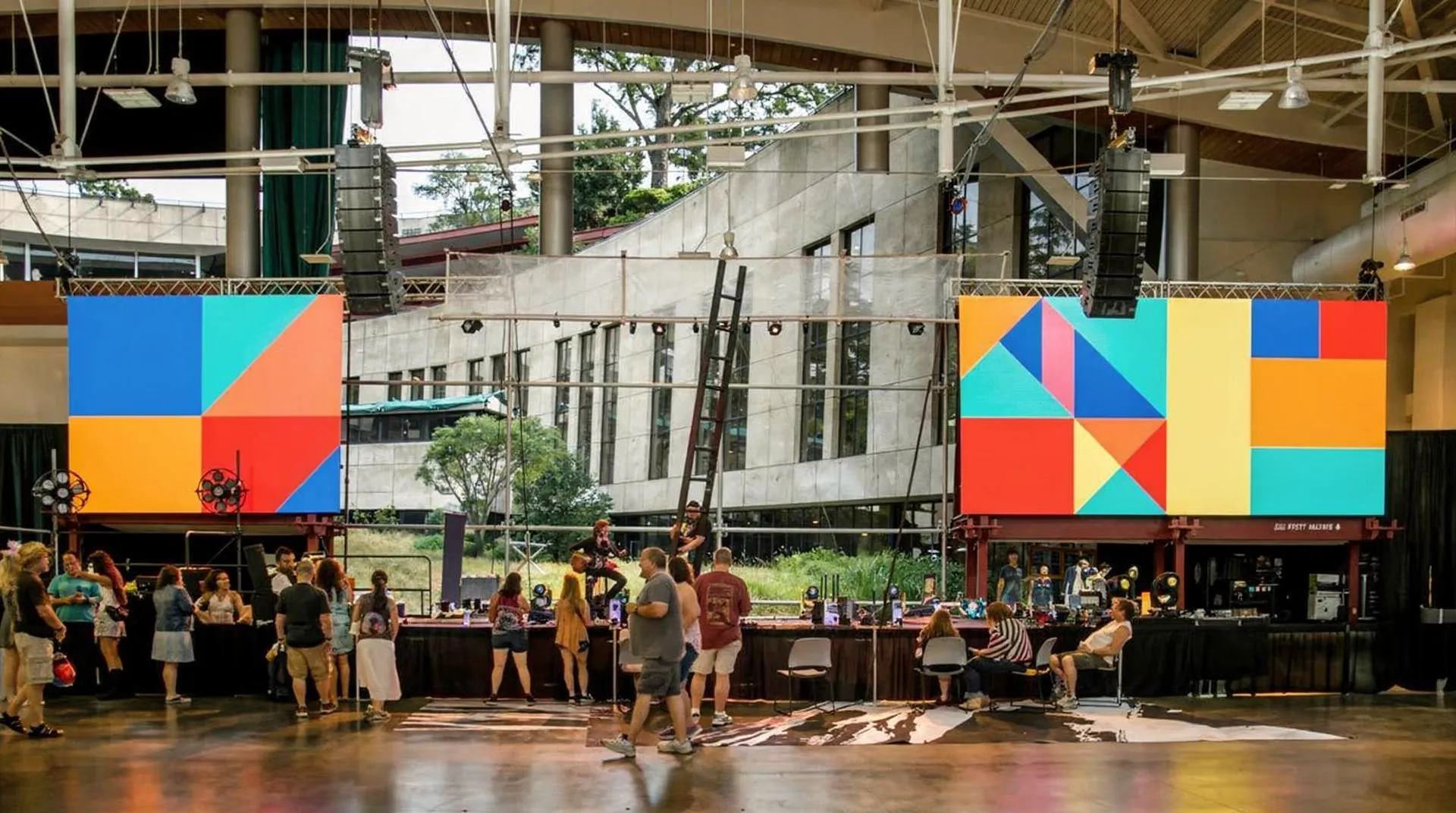
Finish selection directly impacts on-camera performance. A matte finish step and repeat eliminates glare. Flash reflection, producing clean, professional imagery across photo opportunities and on-camera interviews. Glossy alternatives introduce hotspots that obscure sponsor logos in published photographs.
Big Visual Group provides end-to-end project support — from initial consultation and design through production, fabrication. Installation — ensuring every prerequisite is addressed before a single panel goes to press.
How Do You Plan Your Backdrop’s Layout and Size?
Planning a backdrop’s layout and size begins with matching dimensions to the event space. The number of logos or sponsors to display. Skipping this step produces a cluttered seamless sponsor logo backdrop that undermines brand clarity and wastes production investment.
Standard sizing for step and repeat backdrops is 8 feet tall, with widths typically ranging from 8 feet to over 100 feet depending on the event footprint and sponsor count. For events requiring greater visual authority — award ceremonies, product launches, or large-stage presentations — a 10-foot-tall configuration delivers a more dramatic presence. Choosing the wrong height cuts off standing subjects in photographs, a loss that no post-event edit can fully correct.
Follow these steps to plan your backdrop layout effectively:
- Measure the venue footprint. Confirm ceiling clearance and floor space before selecting a width or height configuration.
- Inventory your logos and sponsors. Count every mark that must appear, then calculate the repeat pattern spacing to avoid visual crowding.
- Select your finish. A matte finish step and repeat eliminates flash glare in photography, keeping every logo crisp and legible across all lighting conditions.
- Choose your material. Custom printed fabric backdrops drape smoothly, resist wrinkles, and reproduce brand colors with precision — critical for sponsor-facing events.
- Confirm production lead time. Our 40,000-square-foot production facility handles large-format fabric printing at scale, but complex widths require scheduling in advance.
What Size Step and Repeat Backdrop Works Best for Corporate Events?
An 8-foot-tall backdrop accommodates most indoor corporate venues and standard photography setups. Wider configurations — extending well beyond 20 feet. Suit multi-sponsor galas or trade show environments where foot traffic spans a broad area.
How Does Finish Choice Affect Logo Visibility?
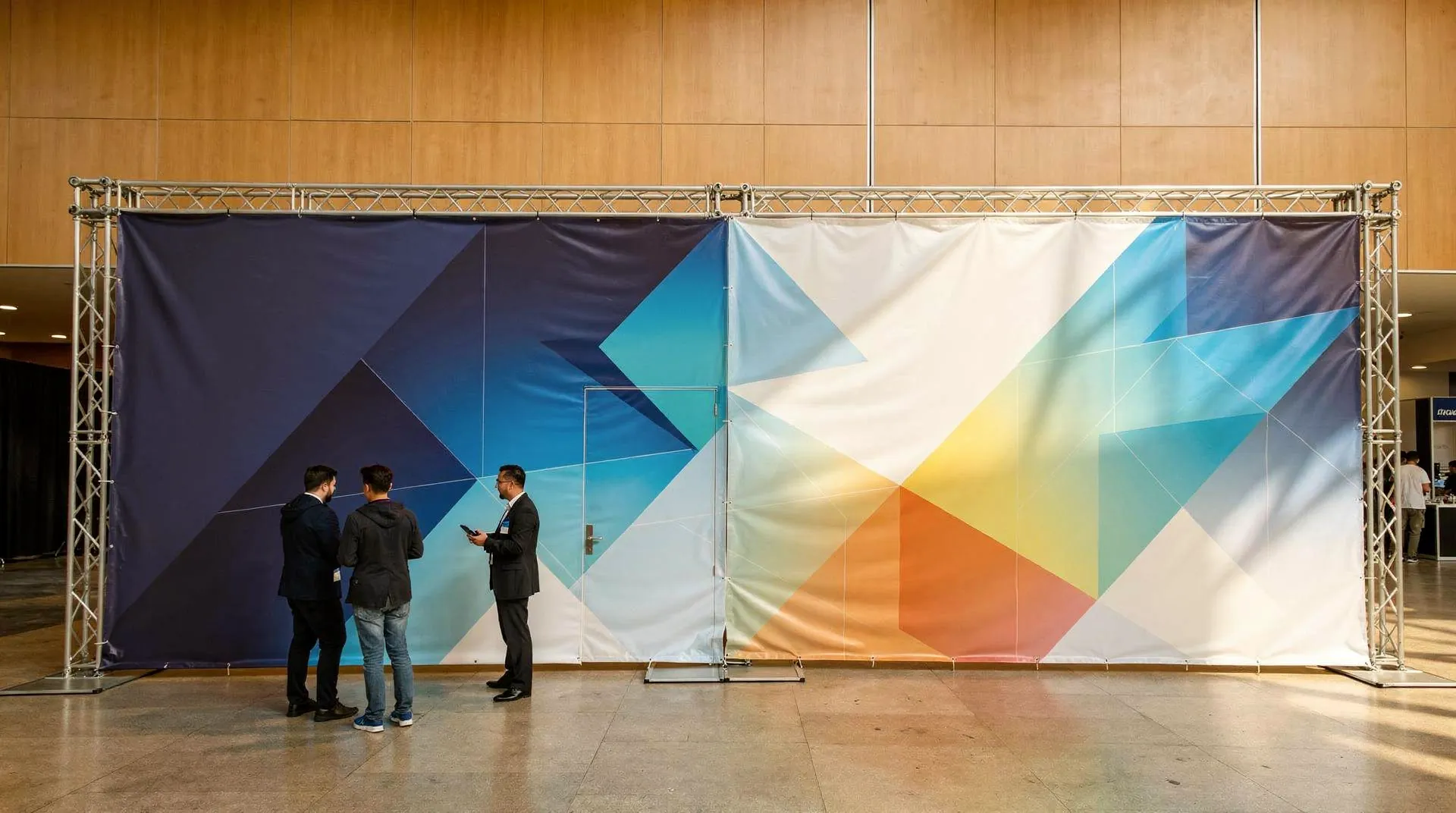
Matte finishes absorb light rather than reflect it, preventing hotspots that obscure sponsor logos in flash photography. Big Visual Group’s fabric printing capabilities ensure consistent color fidelity across the full width of the backdrop.
How Do You Select the Right Fabric Material?
Selecting the right fabric material starts with matching the printing method to the display environment. Choosing the wrong substrate causes graphics to appear dull, misaligned, or prone to fading. Costing brands the visual impact that custom printed fabric backdrops are designed to deliver.
Big Visual Group applies cutting-edge printing technology, materials, and techniques to guide every material decision with precision. Follow these steps to select the correct fabric for your application:
- Define the display environment. Confirm whether the backdrop will be used indoors or outdoors, as fabric graphics with fade-resistant properties are specifically suited for indoor venues such as event halls and conference spaces.
- Choose a printing method aligned to your quality standard. Dye sublimation printing on fabric produces a professional and impactful result — the preferred method for high-visibility applications like a seamless sponsor logo backdrop at red carpet events, premieres, and corporate gatherings.
- Evaluate the mounting system. For tension-frame displays, select digitally printed textile fabrics engineered to lay smoothly and tightly across an aluminum frame. Big Visual Group’s TRIGA® Go display systems are specifically designed for this fabric type, producing a clean and visually appealing surface.
- Consider finish and reflectivity. A matte finish step and repeat reduces glare under event lighting and flash photography, ensuring sponsor logos and brand marks reproduce clearly in every image captured.
Does Fabric Material Affect Logo Clarity on a Step and Repeat?
Fabric material directly determines how sharply logos and sponsor marks reproduce. Dye sublimation printing bonds ink into the fabric fibers, delivering vibrant full-color designs with organized repeating patterns that remain crisp across the entire backdrop surface.
What Fabric Works Best for Tension Frame Display Systems?
Digitally printed textile fabrics perform best on tension-frame systems. These fabrics stretch smoothly across aluminum frames, eliminating wrinkles and creating the taut, polished surface that professional event backdrops require.
How Do You Design and Proof Your Artwork?
Designing and proofing artwork for custom printed fabric backdrops begins with a structured creative process. From initial concept through final approval. Skipping any stage of that process risks misaligned branding, inconsistent logo placement. Print-ready files that fail to reproduce accurately on large-format materials.
Big Visual Group provides concept, design, and branding services that guide clients through every phase of creative development. Our knowledgeable sales consultants oversee each project from start to finish, ensuring that design decisions align with your production goals. Brand standards before a single panel goes to press.
Follow these steps to move from concept to approved artwork:
- Brief our design team on your brand standards, event type, and intended backdrop dimensions.
- Supply all logo files in vector format to ensure clean, scalable reproduction across the full backdrop surface.
- Review the layout for a seamless sponsor logo backdrop pattern — confirm that logos repeat at consistent intervals and that no sponsor mark is cropped at a seam.
- Specify your finish preference — a matte finish step and repeat surface reduces glare in photography, keeping logos legible in every shot.
- Approve the digital proof before production begins, verifying color accuracy, spacing, and overall visual balance.
Why Does Logo Placement Matter on a Step and Repeat Backdrop?
A step and repeat backdrop functions as a continuous branding surface, not merely a decorative background. Prominent, well-spaced logo placement delivers uninterrupted brand exposure across every photo taken at the event, turning each image into a lasting brand impression.
What Happens If You Skip the Proofing Stage?
Bypassing a formal proof approval introduces the risk of reproducing errors at full scale. Errors that are costly to correct after fabrication. Big Visual Group’s experienced production team reviews every file against client-approved proofs to eliminate that risk before production begins.
How Do You Set Up and Avoid Common Mistakes?
Setting up custom printed fabric backdrops correctly requires attention to frame assembly, graphic tensioning, and lighting placement. Skipping any of these steps produces visible wrinkles, uneven branding, and missed photo opportunities that undermine the entire investment.
What Makes a Frame System Easier to Assemble?
Big Visual Group offers TRIGA® display systems built on sturdy aluminum frames that are durable, lightweight, and modular. The modular design accommodates various textile print sizes, so the same frame structure scales to fit different event footprints. Because TRIGA® display systems are engineered for interchangeable textile prints, clients reuse the frame with updated graphics rather than replacing the entire unit. Reducing long-term costs significantly.
Follow these steps for a reliable setup:
- Lay out all frame components and confirm every connector and crossbar is present before beginning assembly.
- Assemble the aluminum frame section by section, following the modular connection points in sequence.
- Stretch the textile graphic evenly across the frame, working from the center outward to eliminate tension wrinkles.
- Position lighting at the correct angle to illuminate the backdrop uniformly — proper lighting is a critical component of a complete setup, not an afterthought.
- Inspect the finished surface for any puckering or misalignment before guests or cameras arrive.
Does Surface Finish Affect Photo Quality?
A matte finish step and repeat eliminates glare from flash photography, keeping sponsor logos crisp and legible in every image. A seamless sponsor logo backdrop with consistent repeat spacing ensures no logo is cropped or obscured at the frame edges. Big Visual Group’s 3M-certified installers apply the same precision standards to every backdrop installation, delivering a surface that performs under professional event lighting.
FAQ
What size do step and repeat backdrops typically come in?
Standard backdrops measure 8 feet tall, with widths typically ranging from 8 feet to over 100 feet depending on the event space and number of sponsors displayed.
Which finish works best for red carpet photo opportunities?
A matte finish eliminates glare and flash reflection, producing clean, professional imagery across photo opportunities. On-camera interviews without obscuring sponsor logos.
What assets do you need before ordering a custom fabric backdrop?
Finalized logos and sponsor artwork in high-resolution vector format, event dimensions, and the event category are required before production begins.